Monday, April 25, 2022

A Nurse Practitioner’s Top 5 Reasons To Travel with Walker Wellness Retreats


  Zion National Park, Bryce Canyon Fall 2021


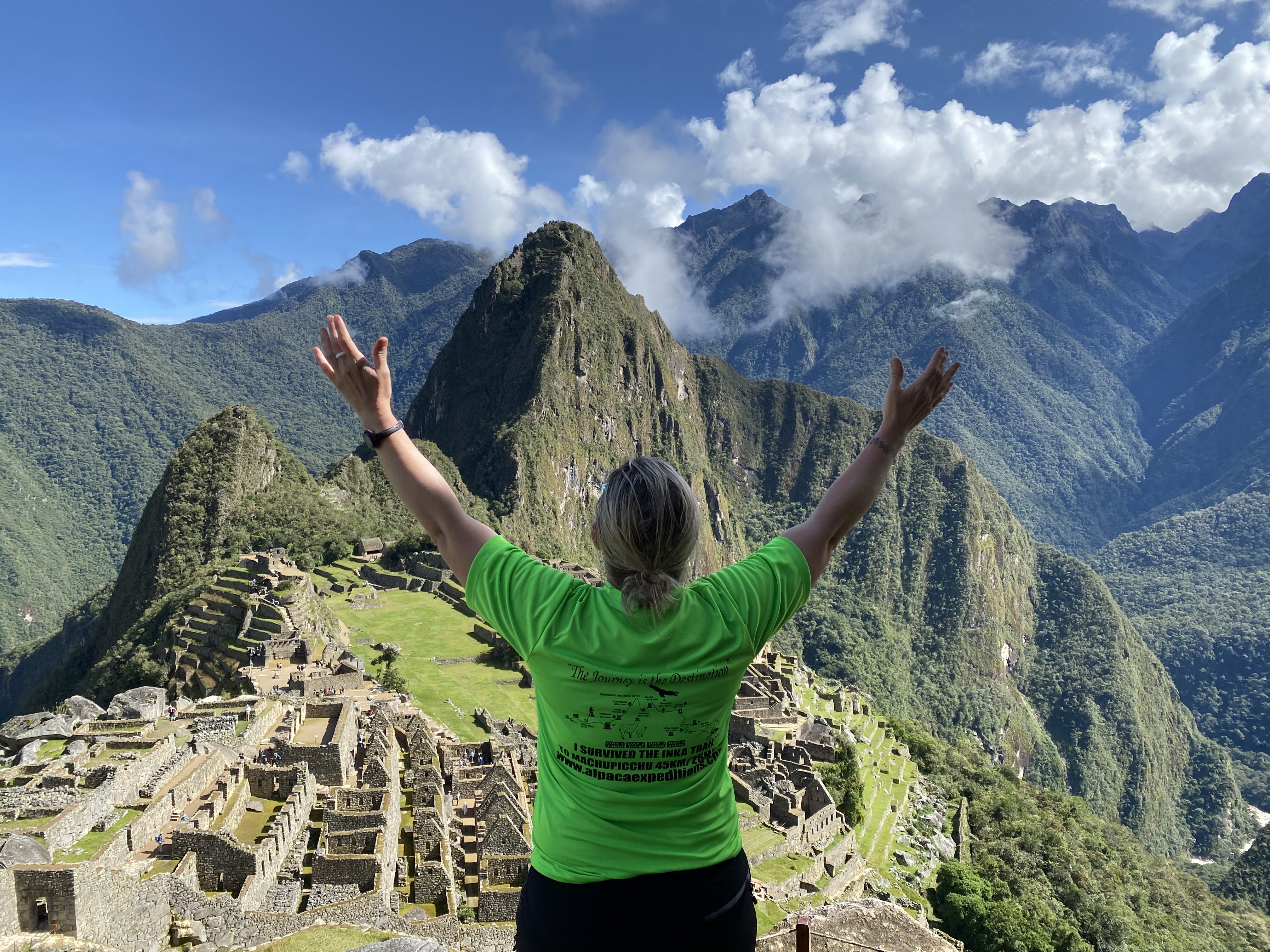
While I am an official card-carrying member of the Walker Wellness Retreats Fan Club (if there were such a thing), the opinions shared here are my own and not sponsored. As a nurse practitioner working in the ICU through the pandemic, Zion National Park was a dream trip of mine. I hadn’t planned a trip as I wasn’t sure who to go with and not all of my family is into hiking. I watched the show “9 Perfect Strangers” on HBO Max (about a TOTALLY MESSED UP retreat) and thought “maybe I can find something like that, only not messed up. I googled “Wellness Retreats Zion” and Walker Wellness popped up. Their reviews were great and the retreat seemed like the right mix of hiking and relaxation. Little did I know that during my November Zion retreat, I would enjoy myself so much that I would book a trip with the Walkers to Peru, with a culture and food experience as well as a 4 day trek on the Inca Trail which finished at the Inca trail. I am typing this on my flight home from Peru.


So why Walker Wellness Retreats? 1. Every Detail is Planned for You: On both the Zion and Peru trips, there was not a single thing to worry about. From pickup at the airport to restaurant selection to Covid testing required to re-enter the US, everything was planned. As someone who often feels responsible for planning and ensuring things run smoothly (at work and on vacation), the idea of a vacation I don’t have to plan is glorious. Someone tells you where to be and when, and you get to truly enjoy your vacation. 2. Walker Wellness Retreats are perfect for solo travelers and small groups alike: The Zion retreat was my first real solo vacation. This was a stretch outside of my comfort zone, but traveling with the Walkers meant I wasn’t alone. I also met great people and hiking partners on the trip. Peru was much the same, though I already knew Amy and Brian Walker when I arrived.


3. Traveling with Amy and Brian is like traveling with friends: Once you have gotten to know Amy and Brian on a retreat, the next retreat truly feels like a vacation with dear friends. The smaller group sizes lend themselves to getting to know the people on your retreat and getting quality time with the Walkers (who are awesome). Even if you travel alone, you are leaving the trip with new friends. 4. The Food: In Zion, the retreat included amazing meals for breakfast and dinner, with an incredibly fresh spread for make-your own wraps/sandwiches/snacks to take on your hikes. There were several people with dietary restrictions on my retreat, and there were Gluten-Free, Lactose-Free, and Vegan options at every meal. In Peru, each restaurant was pre-selected and meals sometimes ordered family style so we could try a variety of foods. On the Inca Trail, the food provided by Alpaca Expeditions was incredible (especially considering it was all carried by porters and cooked at the campsites). Lunch and dinner were always multiple courses, shared as a group during the hike.

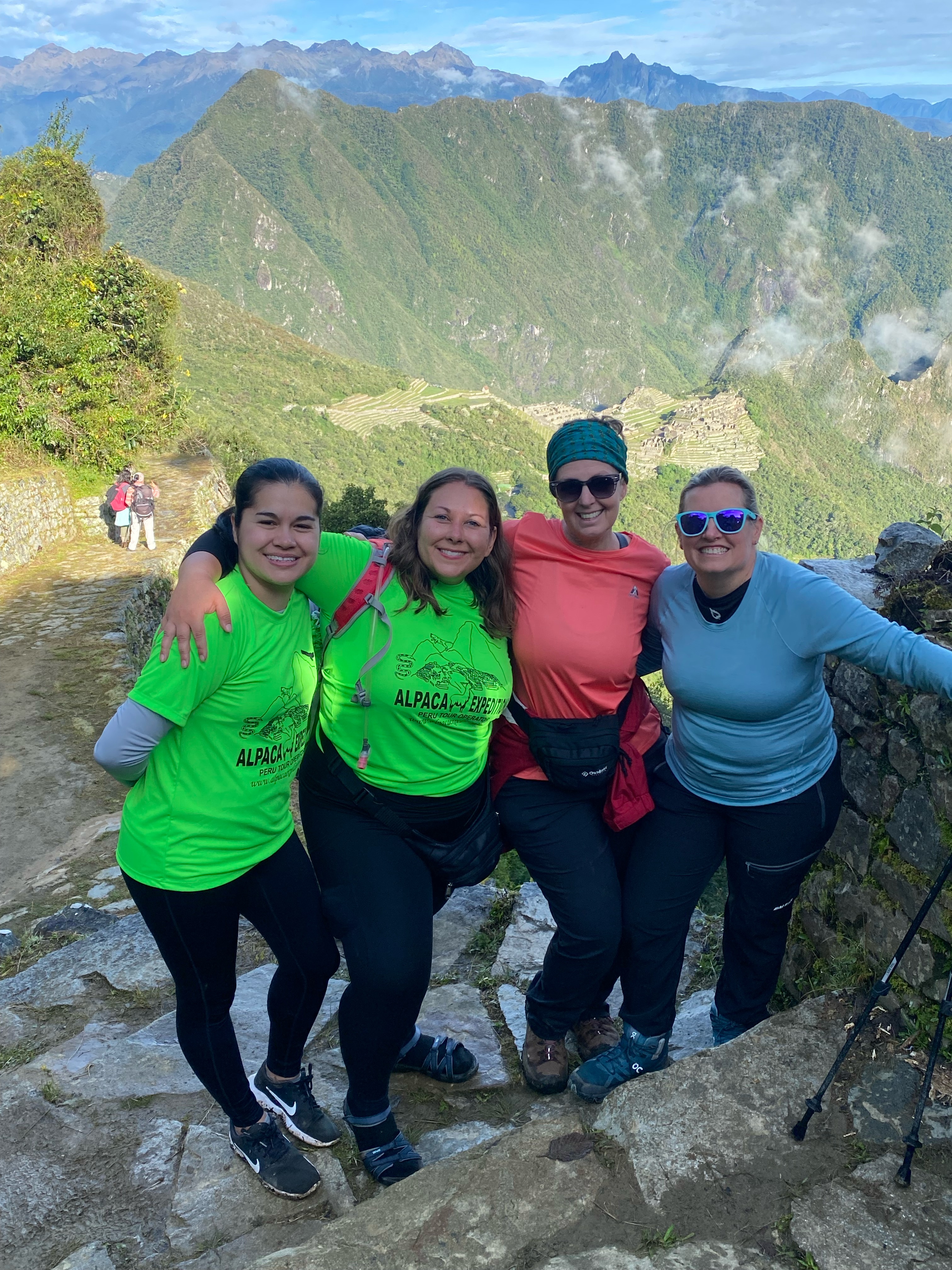
Making it to the top of “Dead Woman’s Pass” with a dear new friend

5. Thoughtfully curated experiences: Amy and Brian Walker do extensive research when planning a trip. They look for the best tour guides, restaurants, cultural experiences, and in the case of Peru trekking company for Manchu Picchu visit. As the Walkers are on the international trips with their guests, they get real-time feedback on each experience. They also adjust plans as needed to enhance the experience for the group. Their thoughtful approach and attention to detail make the trips exemplary.

Walker Wellness Retreats helped me find an outlet in the most challenging year of my nursing career. I also found amazing friends and travel partners….and my journey with Walker isn’t over.


Wednesday, August 18, 2021

The (Last?) Phone Call to Their Loved Ones

 If you ask ICU team members around the country, one of the most heart-breaking things they witness with COVID-19 patients is the phone call a decompensating patient makes to their loved ones prior to being placed on the ventilator. While some patients arrive at the hospital in such dire condition that they must be immediately put on a ventilator, others arrive and slowly decline over days to weeks. COVID-19 often offers us an almost cruel window of time, again often days, in which we know a patient is declining but do everything in our power to stave off the inevitable.

When it is apparent we can wait no longer, we still often have time. Time to allow patients to call or video chat with their families. Each of us has held the phone or tablet for more patients than we care to count. Allowing them to tell their families how much they love them. Hearing their families provide words of hope or prayer. We reassure the family that their loved one will be made comfortable with sedation. We hold out as long as we can, not wanting to end the phone call, or deflate the hopefulness. Because we know. We know that so many patients who go onto a ventilator due to COVID-19 lung disease will not survive. We know that this will be the last time they talk to family. We know that hours, days, and even weeks will go into caring for these patients to no avail, and countless updates will be given to their loved ones.

We are tired. Our hearts are heavy. The ICU is not the battleground on which we will win this fight- that will happen with vaccine and social distancing and masking- but we have to keep fighting. Even as we fear variants that render vaccination less effective, and beds that will soon reach capacity. Many of us couldn’t imagine doing anything else, but none of us could have imagined what this would mean. What it would feel like to make that last phone call over and over again, to see more loss in 18 months than we have seen in decades-long careers. We will not win on the ICU battleground, but we have no choice but to fight.

Sincerely,

A tired and heartbroken ICU nurse practitioner

Tuesday, December 15, 2020

Why I Will Get the Covid-19 Vaccine

 Disclaimer- this is my opinion, based on facts I have acquired. It is only my opinion. It is also the opinion of a Nurse Practitioner who has cared for countless Covid-19 patients since March and lost so many whose families shouldn't have to be mourning a loved one.

Why am I getting the vaccine? 

  • Because the people in charge of vaccine rollout are nonpartisan scientists who just want to do the right thing for people.
  • Because the COVID-19 vaccine is based on the MERS-COV vaccine that was in development several years ago
  • From the CDC: "The U.S. vaccine safety system ensures that all vaccines are as safe as possible. Safety is a top priority while federal partners work to make a coronavirus disease 2019 (COVID-19) vaccine(s) available."
  • What are the side effects? Pfizer has run tests that include more than 44,000 people. An FDA analysis of the vaccine's safety and effectiveness on people aged 16 and older found "no specific safety concerns" that would preclude the vaccine's use. Some mild to moderate side effects are common — mostly swelling, pain, redness at the injection site, fatigue and sometimes including fever that resolves within about 24 hours. link here
  • The American Nurses Association and American Association of Critical Care Nurses recommend vaccination 
  • Because healthcare providers are weary. We are tired of somber phone calls to family members for days on end. We are tired of being the only ones to bear witness as a patient with Covid dies. We are tired of fighting a battle we know we will often lose. Because, as a colleague said, "we keep coming to work because THERE IS NO ONE ELSE". 

Sunday, June 14, 2020

A Letter to My Grandmother


I wrote this letter and mailed it on May 19. I hope our grandmother was able to read it or have it read to her and that she understood it. I am sharing because I think our ability to get through our current crises has been forged by those who raised us, the grandparents who lived through World War II and grew up in the time of the Great Depression. The parents who marched for equal rights. The "Greatest Generation" is just that for a reason, and we need to reflect on that reason and draw on it as we find our purpose in the "next normal".

Dear Grandma Jossi,
I started writing this letter on April 29th, and then got sidetracked with work and motherhood and so many other things. After the call tonight that you had either a stroke or mini stroke, I knew I had to finish it. Thankfully Mere and I were able to hear your voice and even though you have some expressive aphasia, you are still undoubtedly you.

Whenever I have described you and your character, I think about how you were born in the time of the Great Depression and how it shaped you. You always saved (you were worried we thought you were a hoarder, but you were an organized saver). You certainly bought us material things (we waited for your visits to go to the mall), but you gave us far more in experiences. Trips across the country, to Gettysburg, to Florida. 

You taught us that some pots and pans, rice, and water on the back porch can be the most exciting science project. 

You made “Huckleberry Finn” narrated by Dick Cavett interesting, even the 465th time we listened to it driving across the country. 

You and Grandpa taught me at the age of 10 how to pull up at a campsite and make friends. If there weren’t kids my age you taught me how to find my own adventure.


As we experience COVID-19, we have technology and food delivery and so many things you didn’t have growing up. We also have fear, and uncertainty, and worry that those we love will become sick or lose their jobs. I feel like our generation is finally understanding what it must have been to grow up during or shortly after the Great Depression, and what it was to worry about loved ones overseas in World War II. Only our battlefront is here at home.

When we talked recently about one of the historical fiction books I sent you (about amazing women in World War I), you told me “I love stories about women who kicked off their dancing shoes and put on their boots and got things done.” You are one of those women, and you have raised us to be those women. I came across these pictures of you and they make me think of what an amazing and strong and beautiful woman you are.

One of the hardest parts of this pandemic has been caring for patients who can’t have their loved ones visits. Our nurses and staff have become their families. I am so thankful for the staff there at Lifecare who are taking good care of you.
                          We love you very much

Saturday, April 25, 2020

How COVID is Changing My World as an ICU Nurse Practitioner

This is my story, our story. I share it not for recognition, or gratitude, or pity. I share it so you understand what it is to work in a community hospital, three blocks from my home, during this pandemic. So that the social distancing and the home isolation are worth it for you. So the empty shelves at the grocery store and the mask you have to wear are a little less bothersome. So my children missing major milestones in their adolescence is worth it. So that the days upon days of fighting a virus we don't yet know or understand are worth it. So that we remember, when we start to find our new normal.

Nurses and front line healthcare providers (nurse technicians, phlebotomists, providers, radiology technologists and so many more) have long faced violence from patients and their families as one of our biggest threats. This isn't just violence from patients intending to do harm, but those who are confused or have neurologic impairments such as dementia and do not understand the implications of their actions. This epidemic (a strange word to use now to describe something that isn't infectious) has gained more recognition, advocacy, and even legislation over the past several years. The American Association of Critical Care Nurses issued a statement on workplace violence in 2019.

Six months ago, if you asked any Nurse the biggest risk they face at work, a vast majority would have answered workplace violence. These incidents are far more frequent than the lay public would likely imagine (OSHA reported that from 2002-2013 incidents of serious violence were four times more likely to occur in a healthcare setting than in private industry).  Suddenly, we have been catapulted into the front lines of an entirely different threat. "Front line" infers a battlefield, and for Nurses and other healthcare providers and hospital workers, this is truly the closest thing to battle those of us who haven't served in the military will ever know. I say that with all due respect to those serving, knowing the threats they face on deployment every day. This is the first time each and every one of us goes to work every single day worrying about the threat we face.

"Will this be the day I get sick?" "Which of my co-workers is most at risk of getting sick?"
"Do I need to worry about this sore throat or am I just run down?"


Sitting at dinner the other night, I told my children that the way their world feels right now is much like we felt in the days after 9/11. My daughter is a senior in high school whose important milestones have been put on pause for this pandemic. I told her this is the part where we wonder what changes to our daily lives will be indelible, and what will "go back to normal".

There are things I hope do become ingrained in our healthcare culture. Our colleagues have become our "battle buddies", as we invest in keeping each other and ourselves safe and healthy like never before. Staff from other areas of the hospital have folded into our ranks, sharing their skills and strengths to make our team even stronger. The relentless teamwork, and the moments of pause that we have taken together, to laugh or cry or just debrief, are things I hope we never lose. The community support...the meals, the headbands with buttons to hold our masks, the care packages, the people who have recovered from covid and are donating plasma ("liquid gold"). My friend Jim Mazzara, #rovingDCpiper, playing bagpipes around the area to lift spirits, and serenading a new mother and her infant with "Happy Birthday" as they left our hospital. Each gesture has been appreciated in ways you cannot imagine. We thank you. We appreciate you.


There are also things that have changed which make our jobs infinitely harder, mentally, physically and psychosocially. We are professionals grounded in evidence. "Evidence Based Practice" has become our mantra. When a patient suffers a heart attack or heart failure, I always tell them "cardiologists love research, and we have a recipe for everything. I may not know the exact specifics yet, but I know the ingredients we need to help you get better and stay out of the hospital." It is said that it takes as many as 17 years for research to be fully translated into practice. Suddenly our practice is changing daily. There is little evidence and we make the best decisions we can, with the available information, guided by experts in infectious disease and critical care. We are fortunate in Maryland to have the benefit of lessons learned from colleagues in New York, New Jersey, Italy, China, and so many other places. We had time to prepare, to empower ourselves with knowledge of their successes and lessons learned. We have had to constantly pivot, then educate providers and front line staff on changes in personal protective equipment, patient management, rules, regulations, you name it. That is just the logistics and protocols, then you get to the human part of what we do....

For decades, it was thought that families should not be present in the Intensive Care Unit (ICU) during invasive procedures or cardiac arrest. Researchers slowly chipped away at this misconception, showing that family members have a better understanding of what happened to their loved one when they can be present at the foot of the bed, or outside the room, with a member of hte team explaining what is happening. They see that everything was done for their loved one, they have a better grasp on the reality of the situation than they would sitting in a cold and unfriendly hospital waiting area. We worked to change culture, to convince colleagues that family presence did not increase liability, that we could still talk through our plan of care and discuss treatment options and advanced life support protocols in front of family members. Family presence is an area in which our small community hospital has long excelled.

Prior to Covid there were no "visiting hours"; families (biological and chosen) were allowed in our ICU and nursing units 24/7 as long as there was no impediment to patient care. Family members were encouraged to participate on daily rounds in the ICU, and if they missed the rounds at 9:30am they were repeated by our Nurse Practitioners and Physician Assistants at 9:30pm and they could participate then. Now each family must be updated by phone, and despite requests for one spokesperson, multiple understandably concerned family members call the unit inquiring about their loved one each day. These calls and video chats are their only point of contact, unless their family member is able to talk by phone. We ask family members to email photos so we can make posters for each patient, to provide them something familiar as they awake delirious from the haze of sedation and mechanical ventilation.

Covid has put us in a place where there is no physical family presence. We are the hand-holders, the cheerleaders, the person standing at the bedside shedding a tear as a patient dies. The ones giving thumbs up EVERY SINGLE TIME we walk by the room of a patient who is awake and improving. We have always been those people, but we didn't replace a patient's family. We supported them at the bedside and when they were not present we provided whatever the patients needed. Now there is no one else. It is only us, the healthcare providers, who can hold hands, soothe our patients, give them dignity and respect, bear witness at the end of their lives. And WE MUST bear witness. It is unspoken that no patient should die alone. We hold their hands, we tell them how much they are loved by their family, and that their family will get through this difficult time, we pause to recognize the person that existed before COVID, before the tubes and lines, before we became their extended family. Then we call their family again, and let them know that they weren't alone, that we were there, that (if they were religious) we prayed with them, or sang to them, or played soothing music. That someone who cared was there at the end, to bear witness.

After hearing a Public Health Service officer speak about a mural used to memorialize Ebola patients in Liberia (those who survived and those who perished), I shared the idea with our staff. Chaya, a friend and Nurse Practitioner Colleague, went to work with her art supplies and created a foundation. Our staff then began to contribute, remembering each patient we have fought to save, regardless of outcome. The painting has gained more flowers and stars since these photos, a remembrance and a moment to pause as they are painted.


Whatever your job, imagine cutting holes in a trash bag and putting it on yourself like a poncho (or like a wrestler trying to drop weight). Then put a tight-fitting mask on your face, a plastic eye shield, and gloves and go about your day. It is hot. It is sweaty. You start to discover pressure points on the bridge of your nose. You are often in a room with a "scrubber" that is used to filter the air (imagine the loudest industrial fan you can, then imagine louder). To communicate with people outside your patient's room you write notes on a whiteboard "Need a gown." "Need a new Levophed drip" "Need a boost", then knock on the glass door to get the attention of someone outside the room. Change in and out of this outfit without touching your face, approximately every 30 minutes. While in this garb, put your cell phone or tablet in a ziploc bag, and attempt to face time with someone while standing right next to that industrial fan.

We have been told this is a marathon, not a sprint. I ran one marathon. In 2008. It was 26.2 miles. I beat Oprah, which was my one goal. A marathon is 26.2 miles. It is finite. Even at mile 25, when you have hit the wall and think you can't go on, you KNOW you only have 1.2 miles to go. This is an endurance race in which the finish line keeps moving. It is not finite. When you hit the wall, you have to have your moment (and I have definitely had them- tears, frustration, fatigue, sorrow, illness), and then you have to lean in and get back to it. Sometimes it takes a kick in the pants, or a boost from a colleague or loved one. Whatever the motivation, you get back to it. For your patients, for their loved ones, for your colleagues. Because it is your calling. Because if you were sitting at home you would want to be there, helping. Because you are a helper. Even when it is hard. Even when it is risky. Even when there is no finish line in sight.

When the curve flattens and things "go back to normal", we will still have COVID patients who are days and weeks from leaving the hospital. We will still be fighting this battle as things start to reopen. The outside world will move back toward normal but ours will still be filled with COVID. The patients who are still healing, and then the worry of resurgence. But it will also be filled with so much more- with the relationships we have forged, fighting this battle together, with the people who have supported us, with the reminder that we are called to this work, with our pride in being healthcare providers and hospital workers, with the memories of patients we have gotten through moments we thought they wouldn't survive who are now home with their families. As we whisked a terrified patient from a medical floor to the ICU with his oxygen level plummeting, my colleague Rachel, a Physician Assistant, provided him an explanation of what would happen next, and words of reassurance that have since been repeated countless times.
"This virus is strong, but so are we."


Tuesday, October 15, 2019

Chasing Zebras: An NP Perspective on Being a Patient with an Undiagnosed Illness


When making a medical diagnosis, providers are told to rule out the "horses" before looking for the "Zebras". A zebra is defined as a very unlikely medical diagnosis. A good example is jumping to the conclusion that a mild headache is a brain tumor before ruling out other causes. The health care team should always rule out the life-threatening potential diagnoses associated with a set of symptoms, but also be looking for the most obvious and common causes of those symptoms. When none of the standard explanations fit, then we begin looking for Zebras.

Many of my family and friends know my saga... Numbness and hyperalgesia (increased sensitivity to pain) that began in early July. It started on my right side (first my face- leading to a diagnosis of Bell's palsy, but quickly down my arm and leg). Tests were done to rule out all of the scary or life-threatening things (Lyme, MS, Guillain Barre, Myasthenia Gravis, Meningitis, Neurosyphilis , HIV, etc). My neuro exams were always normal. The only thing abnormal was sensation. The symptoms spread to my left side and everything felt incredibly heavy. My legs and cheeks have been the worse. It isn't noticeable to others but for weeks it felt like it took immense effort to smile. My tongue was numb first on the right and then bilaterally, and any worsening of symptoms led me to feel like someone under the influence of alcohol who was trying to pretend I was sober. It took great effort to feel like I was speaking normally. After a while, these symptoms make you start to question your own sanity. None of them are testable or visible to others. I asked my doctors repeatedly if they could be psychosomatic but the feeling was that they were related to a physiologic insult. My EMG (Electromyelogram- fairly painful test of the electrical activity of muscle fibers) was normal. My MRIs and CT scans were normal. The only working theory was that I had developed a post-viral neuropathy which meant a cold virus I had before these symptoms started somehow affected my nervous system. The fact that it was on both sides and over the entire body was unusual. The neurologist told me that we likely wouldn't find the cause, but that it should get better over a period of months (from my reading I knew it could be up to one year or more).  

By August we were looking for Zebra diagnoses that explained my strange constellation of symptoms. At this point I was crowdsourcing my diagnosis (to colleagues, laypeople, everyone)... I was willing to consider any and all potentials and kept a running list of the things we hadn't yet tested for that we should consider. I was also working on accepting that likely we might never know the cause or how to make it better aside from sitting and waiting.

It was also in August, the really bothersome symptoms started- I had episodes randomly in different places all over my body of feeling like there were fire ants crawling on my skin, or of a burning/itching sensation. It wasn't traveling along a specific dermatome or nerve path. It was completely random and uncomfortable. I tried Gabapentin which I eventually stopped because I felt foggy all the time. I told my colleagues I felt like I had "gone from an A student to a B student". In addition to the fogginess I had a rising anxiety. I often felt like I was crawling out of my skin. It reached a fever pitch in September. I was able to exercise and physically could do everything I did before July, but the symptoms were getting the better of me mentally. My primary care physician was amazing and helped me navigate all of this. In mid-September, after many conversations, I mentioned to her something I hadn't thought of before: ever since last October, when I exercise and then go out into cool air, I break out in hives. The first time it happened it was disconcerting, but it happened a few times over a several month period so I didn't think anything of it. My PCP immediately suggested I see an Immunologist/Allergist who works in the local area and likes "zebra" cases.

At the same time, I took more control of the things I could control. I was back to baseline in my workouts. I started eating an autoimmune diet (thanks to the suggestion of a dear friend), and began acupuncture treatments. Two weeks ago, I saw the immunologist/allergist, who told me that my case was definitely "weird" (in a nice, "You are an NP so I can tell you that you are a zebra" way).  I told him about the numbness and the painful symptoms. Then I added in the hive piece. He immediately said "You have cholinergic urticaria". What the heck is that, you ask? It is an inducible hive disorder in which hives are causes by environmental stimuli (heat, cold, exercise, etc). The Mast Cells in the body (which are important in immune response and allergic response) are involved in the reaction, releasing histamine in the skin. (Too much of a good thing with those Mast Cells in this case).

What he said next really had me intrigued: people with chronic hive disorders often have a prodrome (an early symptom that indicates the onset of a disease or illness). This is often described as transient and patchy, either itching, burning, or painful sensations. The fix? An antihistamine like Loratidine (Claritin) every day to prevent the histamine release. He told me to try that for two weeks and if the painful symptoms improved, we know they were caused by the chronic urticaria. He said he couldn't fix or explain the numbness, but again reiterated there was nothing to suggest it was life-threatening. That said, there was hope that perhaps we had an answer to the painful symptoms. Two weeks later and the claritin is working. Today I had an episode of post-workout hives but I think that was in part due to eating some new foods I hadn't been eating on the autoimmune protocol diet. 

So apparently I have two unrelated issues, and the numbness and hyperalgesia have been making the hive disorder feel a lot worse than it had previously. Even on a day like today when the symptoms flare up a little, at least I know we have a path and a plan. I wouldn't have chosen to be a Zebra, but I'm thankful for persistent healthcare providers who helped me get to the bottom of things. (At least some of the things, since the numbness and hyperalgesia are still an issue, but I am hopefull they will improve).


Tuesday, July 16, 2019

I love mysteries... I don't love being one

In 5th grade, my parents met with my teacher because they were concerned that all I would read was Nancy Drew books. The original Nancy Drew series, the 80s reboot "Nancy Drew Files", all the Nancy Drew/Hary Boys crossover books, and the choose your own ending Nancy Drew books. I wanted to be Nancy Drew. The teacher told my parents that my reading ability was not in question and as long as I was devouring books I could read whatever I wanted.

As a pre-teen and teenager I wanted to be Nancy Drew. It was years into my nursing careeer that I realized solving medical mysteries brings me a lot of joy, and that in my own way I get to Nancy Drew the heck out of things. What clniician doesn't love getting thattidbit of medical history that no one has- that nugget that leads to an unexpected diagnosis. Pulmonary embolism is one of my favorite diagnoses because it often mimics other things. For my healthcare friends, there is a great book entitled "Mastermind: How to Think Like Sherlock Holmes" that lends some insight into looking at things differently. 

So on to my medical mystery.  I'm sharing because if you work with me you have likely seen me as a patient this week, and I am open to other thoughts/suggestions. Here are the highlights:
- After fighting a cold (sore throat, cough, etc) for a week or so, on Saturday July 6  I noticed in the morning that my right cheek felt numb. When I say numb, I dont mean without any feeling, more that "pins and needles" feeling you get when novocain at the dentist is wearing off or a limb is waking up from being asleep. My motor activity was still intact. No slurred speech, no facial droop. My healthcare friends will understand this: I knew I would not consent to tPA just for this facial numbness, so I didn't rush to the ER. I was thinking perhaps Bells Palsy. I eventually went to the ER, got lab work including testing for Lyme, and antibiotics for possibly Lyme.
- Sunday July 7- I woke up and the numbness was still in my face but also down my arm. ER trip #2. CT and CTA (CT scan with contrast to look at the blood vessels) of my head and neck. Brain and carotids looked great. Then an MRI of Brain, C, and T spine. All totally blissfully normal. I was now on Valtrex in the event it was shingles or another viral issue, and Doxycyline. At this point we ruled out some of the scary things: stroke, MS, carotid artery stenosis, ALS, and a variety of infectious disease.
- Wednesday July 10- woke up and the numbness was going down my leg (now on my entire right side). A neuro exam showed I'm actually hypersensitive to pain but have the constant pins and needles (the good news there is I don't have to worry about getting an injury and not feeling it).
I ended up back in the ER so my very awesome neurologist could assess me, and they ordered a Lumbar Puncture. My cerebrospinal fluid was normal, except for a high number of lymphocytes (a type white blood cells) which suggests there had been an infection. 
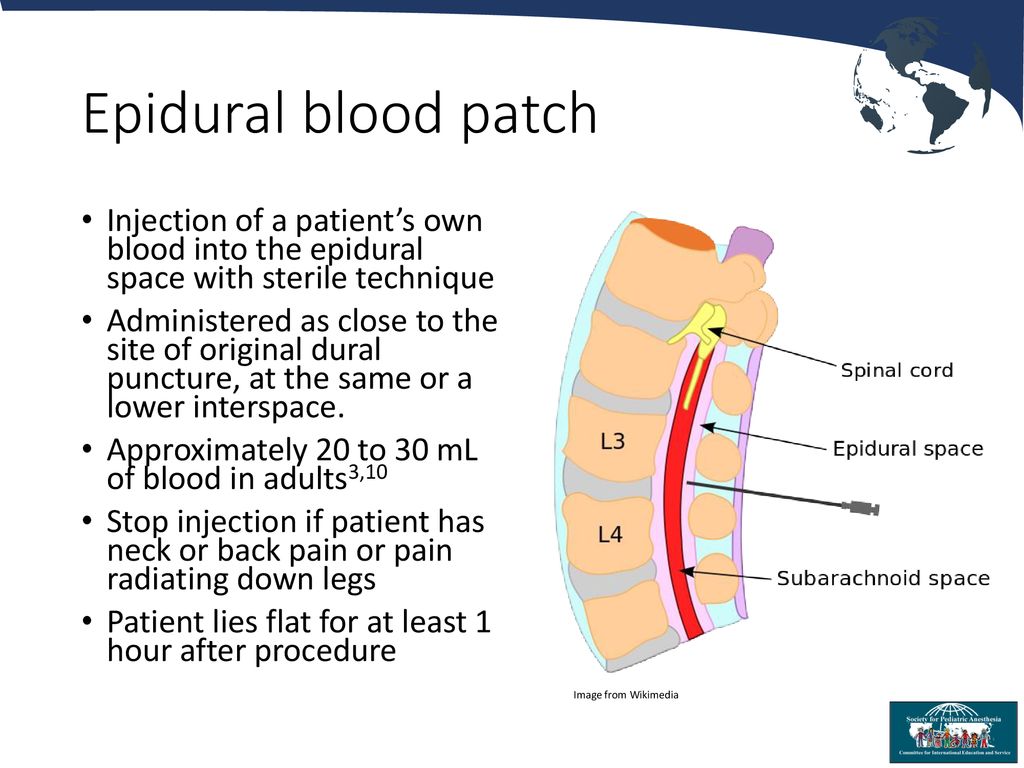
-Thursday July 11- Developed a wicked spinal headache from the LP. I have a pretty high tolerance for headaches after 30+ years of migraines. This was pretty horrendous. Caffeine and hydration are the antidote. The alternative is a blood patch but we saved that as a contingency if the conservative management didn't work.
- Saturday July 12- Woke up to pins and needles on my left side. (Not nearly as bad as the right, but there nonetheless). Saw the neurologist and since motor function and reflexes were totally intact there wasn't really anything to do but wait. He still thinks this is a post-viral syndrome that will burn itself out. 
- Monday July 15- the spinal headache was still unbearable. Went to the ER where we tried IV caffeine (IV caffeine...all the coffee drinkers reading this are thinking yeeeesssss!). It was about the equivalent of 9 Mountain Dews. I was shaky but the headache persisted. 
Image result for mountain dew
So that led us to the blood patch. Not my idea of a good time but at some point you just want to feel better. 
Image result for blood patch
Tuesday July 16- My back is sore for sure, but manageable. The numbness is still there. It hasn't gotten better since it started. As I've described to alot of colleagues and friends, my tongue feels funny so when I speak I feel like an intoxicated person who is trying to sound sober. (But my speech actually sounds normal). The ongoing opinion of neurology is that this is the effect of a virus I had previously and it should hopefully improve over time.

Lessons Learned
- Sometimes you have to find peace with uncertainty. This is definitely frustrating but there hasn't really been an alternative option. We've ruled out all of the big bad things, so that is the silver lining on which I need to focus.
- 4 ER visits in 8 days starts to make you feel like a crazy hypochondriac. Friends and healthcare providers who validate your medical concerns help you to feel less crazy. (and yes...I have asked multiple providers if this could be stress/psychosomatic and no one believes it is).
- The simple gesture of a doctor or nurse pulling up a chair to talk to you when they obtain a history or perform an exam makes all the difference in the world. I know how busy nurses and providers are, but so many have taken the time for me this week. 

So many thank-yous to my hospital family, my actual family, and my amazing friends. In the grand scheme this numbness isn't a huge deal...but the journey to ruling out the big bad neuro insults and the ongoing addition of symptoms definitely led to a few stressful days. 

Friday, August 31, 2018

Lessons Learned from the Other Side of the ICU Bed


Six years ago, we lost an amazing patriarch. As the nurses in the family, and the oldest child/grandchild, my Mom and I flew to Michigan to be there with our grandfather and his wife as difficult decisions were made. Dr. Frank McDonald was a rocket scientist (literally). He was chief scientist on the Voyager spacecraft, which would exceed all expectations as it spent decades looking for the edge of our solar system. He has a wikipedia page which outlines his scientific accomplishments. Grandpa McDonald was the Sun in our McDonald family solar system. He always said he wanted to die at his desk, and he would retire from one job only to go on to the next one. On August 30, 2012, he was giving a scientific lecture to a group of colleagues. He finished his talk and collapsed. On EMS arrival he had agonal respirations and required intubation. Treatment at St. Joseph's Medical Center quickly revealed a massive cerebral hemorrhage (he was on warfarin for atrial fibrillation).

Stepping away from the emotion of losing a beloved family member, there are three very specific things that stuck with me during our experience. Things that I had to appreciate from the family member perspective in order to truly integrate them into my own practice as an Acute Care Nurse Practitioner. I have shared this story often, but as the anniversary passes once again I thought it time to write it down.

1- When delivering unexpected news, provide information in small bits and ensure family members have the information they need to take appropriate next steps. My Mom and I are a high functioning nurse and NP. We eat crisis for breakfast. Our every day at work is often someone else's worst day. On August 30, however, I vividly remember myself walking around in circles, packing a bag without actually accomplishing anything, while talking to the trauma social worker from the St. Joe's Emergency Department. She gave me step by step instructions: "Get a pen and paper. Here is the address of the hospital. Here is the airport you need to fly in to. Here is what to do when you get here." Without her to focus me, I'm not sure how the details would have gotten taken care of.

2- Color-coded scrubs truly are helpful for patients, families, and visitors.
Our hospital was just starting a conversion to color-coded scrubs when I traveled to Michigan (RNs were to wear navy, Nurse Techs a carribean blue, PTs and RTs maroon, etc). There were mixed feelings about this among staff, as it was a big change and seemed to take away some independence and creativity. On the other side of the bed, as a family member, the colored scrubs were incredibly helpful. St. Joe's had fully integrated this into their dress code, and I knew anyone walking in with grey scrubs was a respiratory therapist, anyone in blue an RN, etc. It helped know to whom to direct which questions, and provided a sense of structure. There was also a key to the scrub colors hanging on the wall in the room to clue visitors and patients into the color scheme.

3- A "Comfort Tray" is one of the most thoughtful and underutilized support mechanisms we have for family members in critical care.
After spending a night of very intermittent sleep in the ICU, I awoke to a cart in the corner that held bagels, pastries, coffee, and juice. There have been countless times I have given family members a gentle reminder to take care of themselves and make sure they sleep and eat. To have someone remove the thinking for me and give me the tools I needed to take care of myself without having to leave my grandfather's room was a huge gift. It was a reminder that the staff wasn't just taking care of my grandfather, but us, as well. With the tray was a thoughtful note from the hospital and their palliative care team letting us know they were thinking of us and offering something small to help ease our journey. I had never ordered a comfort tray prior to that experience, but now I do it often. That small gesture meant so much, and allowed us to focus on other things.

While none of us hopes to walk in the shoes of our patients or their families, it is often inevitable. Taking time to reflect on that perspective can help us to further hone our craft and provide even more exemplary, evidence-based, and compassionate care.

Monday, May 23, 2016

Charging Over the Hill

For some reason, 40 is an age that has always held a negative connotation. 40 puts you "over the hill". Technically, the average life expectancy of a woman in Maryland is 81.27 years, so perhaps 40 is mid-life.. but why is it an age to be dreaded???? I never really gave it much thought. Now, with 24 days to go, I am pumped!


Yes, things are sagging that I wish weren't, yes I will need reading glasses before too long. All things considered, I don't dread 40. I AM EXCITED to turn 40. 2016 has been a banner year so far and it isn't even halfway done. At 40, I've learned lessons I wish I had at 30. The past few years have not been the easiest, but I'm hitting my stride in my professional life, my family is amazing, and I have the best friends anyone could ask for.

I still have lessons to learn. I let the moods and attitudes of others impact me more than I should. I'm not good at saying "no" when I'm asked to take on something new, even if my plate is too full. I have learned, however, to appreciate the small things, the downtime, the quiet in between the chaos.

So as I turn 40, I embrace the last 40 years and look forward to the next 40. I am beyond thankful for those who mentor me, who put up with me when I hit a stumbling block (or have a complete and total meltdown), and those who encourage me. Here's to charging up the hill and embracing what comes next!

Sunday, February 21, 2016

"Yes You Can"


Several years ago, I regularly attended my friend Sherri's spin class. Sherri has a way of being incredibly motivating as an instructor, and often uses the phrase "Yes You CAN". She also says "you can do anything for 30 seconds (or one minute, or one hour)"... a phrase I repeated to myself often during triathlons and running races. More recently, at a different gym, my trainer Emily often says "Yes You CAN" while motivating her classes. She also says "If it does not challenge you, it will not change you." On rough days at work I repeat this phrase to myself.


Yes...these are motivational phrases used to help participants get through a one hour fitness class...perhaps not something people would see as life-changing. For me, every time I hear these words spoken, I want to work a bit harder, to push further, to realize that next goal.

It isn't just at the gym... This year I have had the opportunity to realize a goal I have attempted to achieve three times... a spot on the ballot for a position with a nursing organization I have worked closely with for over a decade. The first two times I didn't make it, but I am fortunate to have several amazing mentors who are leaders in critical care nursing... It was them telling me "yes you can" that led me to apply another time... them telling me "yes you can" that led me to believe I was worthy of applying in the first place. There are many amazing critical care nurses and nurse practitioners out there, some of whom I get to work with daily. So what makes me think I am qualified for this position in the first place? The people who told me "Yes You CAN".

So often we are focused on looking forward, on the next task or next goal. I am absolutely guilty of this at times, but also find that taking a moment to encourage someone else when I am struggling can help me to refocus. If we take just a minute, to look over our shoulders and extend a hand to someone who could use it, and say "Yes You CAN"... how would that impact the world around us? It doesn't have to be someone who is facing an immense challenge... perhaps someone who is already excelling at what they do.. or someone who could use that little push.. Take a moment to say "Yes You CAN", and see what happens.

This topic has been on my mind a lot lately...especially in Emily's class when she says those three little words. Today, a friend shared a story that has gone viral. It is a potent reminder of the amazing things that can happen when just one person says "Yes you CAN." Take a minute to read the story of Sam, the dancing Barista, and then ponder how you can do the same for someone else, even if on a much smaller scale. 


Monday, February 1, 2016

Groundhog Day: One Mom's Story of Stroke Survival


Disclaimer: This isn't my story. This is Amy's story. I was fortunate to be her caregiver, and now her friend. I have Amy's permission to share her story because stroke awareness is so very important.

If you have seen the movie "Groundhog Day", you know that Bill Murray gets endless attempts to live the same day over and over again, until he gets it right. Many of us in healthcare wish we got "do-overs" when we think we could have diagnosed a problem sooner, or treated it differently. But we don't. On Groundhog Day 2006, things went exactly right on the first try...

Amy's story could have gone so differently. It could have been the story of a young mother who suffered a debilitating stroke, unable to use one side of her body and unable to speak. Perhaps with extensive physical and speech therapy, her condition would have improved. It would have been a long time, if ever, before Amy returned to work. Amy's husband Chuck would have been supporting her recovery and parenting their two young sons.

Instead, thanks to an astute coworker, educated EMS providers, and a push to give tissue plasminogen activator ("tPA" or the "Clot buster") to stroke patients, Amy's story is very different. Amy was working at a local school when she developed the weakness and inability to speak clearly. Her colleague recognized the signs and called 9-1-1. EMS providers rushed her to the Emergency Department with extensive detail about her "time last known normal" and her symptoms. In the Emergency Department, staff acted quickly to perform the necessary tests and begin tPA administration. This is when I met Amy, as I helped to support the staff in giving the tPA. This was our second time ever administering it, and frankly, tPA scared us. The concerning side effect is bleeding, especially in the brain, but without it the recovery prospects may be dismal.

Within hours, Amy was moving both arms and legs...soon she was able to begin speaking. I will never forget her telling me how bothersome the bright lights had been, and how loudly everyone spoke to her because she couldn't talk back. Amy left the hospital with minimal disability. She underwent follow up care and management of her stroke risk factors, but ten years later she is a Mom of two wonderful young men, who now travels the country as a consultant to train teachers.

Simply because someone recognized the signs of stroke and acted "FAST", Amy has been able to impact countless others.
- How many swim meets has she attended in ten years, cheering on her sons?
- How many teachers has she impacted with her training?
- How many people were able to recognize the signs of a stroke in someone else because they heard Amy's story?

Ten years later, stroke care has been refined and tPA use, as well as advanced neurological intervention, are much more widespread. The key is for stroke patients to get to the hospital as soon as possible.

So what can you do? Don't ignore the warning signs of stroke. Even if you aren't sure, call 9-1-1 and get checked out. Remember to "Act FAST". The most beneficial stroke care is time sensitive.
Have more questions? Check out the Stroke Association or the American Heart Association.

Sunday, January 3, 2016

I made another Mom cry...and I'm so glad I did!

After a wonderful family getaway, I rushed to the grocery store to pick up food for diner and the coming week. Our kids have reached the age where they can be left home unless they have a burning desire to shop with me.

My first stop is always the produce aisle. As I was choosing my vegetables, I noticed a Mom with a toddler (a boy around 3) in one of those car carts.

Any parent knows those carts...beloved by children and IMPOSSIBLE TO STEER!!! The benefit of an entertained child (or two) weighs out over the muscle strain caused by trying to drive the cart.

Said Mom was picking out squash, and had placed it on the scale and gone to get a plastic bag. She stopped mid-step, and looked back at her son. "I'm sorry, did you want to help me?" He struggled to get out of the car, and Mom reached over to help him. She took him over to the scale, where she asked him to count the squash and they began to talk about how much it weighed.

I thought to myself "What an awesome Mom". I thought of the dozens hundreds of times I coaxed my kids through the grocery store with promises of "five more minutes", or a donut if they behaved. I thought of how few times I took the time to involve them in the process. I thought again, "What an awesome Mom". Anyone who knows me knows that I am a bit of an raging extrovert, and have been known to strike up a conversation just about anywhere. I didn't want to intrude on her Mom moment, so I went about my shopping.

Three aisles later, Mom and her car cart were coming toward me amidst the Taco Tuesday fixins. She apologized for her large cart. I told her she had nothing to apologize for, and that I had seen her in the vegetable aisle and thought she was an amazing mother.

With tears in her eyes, she said "My whole family has been sick. My younger daughter, me, my husband. We are finally getting out of the house after days at home and I feel like I have been so impatient with my son. You made me cry."

I told her again what a wonderful Mom I thought she was, and went about my shopping. All evening, I have been thinking to myself about how much more we could do to build one another up as mothers (or parents). So often we feel inferior because we don't make pinterest-worthy crafts, or we feel impatient, or we feel like we are barely holding it together.

All it takes is someone occasionally saying "you are doing a good job", or in my case a snowboard instructor who tells me that my son was a really good listener...It just takes a minute to make a Mom feel like they are getting it right. Why don't we do it more often????

Monday, September 28, 2015

I always said I make a good Wingman...


I'm dusting off the blog to share my latest passion. Funny enough, I blogged about being a Wingman in 2010, The meaning was a little different, but I've always said I make a good wingman, or "right hand man". Give me a task and I will do whatever I can to make it happen. After watching Melinda, a fellow triathlete, on her journey as a Wingman for some time now, I finally joined Athletes Serving Athletes. This organization helps disabled athletes experience the thrill of athletic competition.

I lost the passion for racing some time ago, but I love having a goal. Watching Melinda help some amazing athletes reach their goals got the fire going in my belly again, this time to pursue helping someone else complete their race. On a recent training run, one of the coordinators was telling me that hearing a disabled athlete speak about his races was truly incredible. I've had the pleasure of seeing Sean on each of my Annapolis training runs. When Sean speaks publicly about his experience, he says that even though he can't run, he feels the adrenaline before a race. He feels the pre-race nerves and excitement, and gets to experience the rush of the wind and the thrill of racing.

On my first training run as a Wingman, I ran with Sean, who gave me investment advice and critiqued my driving of the Jogger in which he was riding. This young man was brimming with personality. He shows up week after week for training runs, and loves participating in races with ASA. This article was written about Caleigh, another athlete I have had the pleasure of running with. If you wonder why this organization is worthwhile, this explains it. The amazing thing about these athletes? There isn't talk about race times, or equipment, or PRs, or competition (although some are known to tease the wingmen out if they "aren't going fast enough"). There is just a love of the sport... A love of being able to do something they might not otherwise be able to do. Each training run I have attended, there is great camaraderie between the athletes, wingmen, and families of athletes. Some of the parents run with us, other times they catch up with one another while their athlete is out running.

How does being a wingman work? Usually you run with 3 wingmen and an athlete in a jogger. The wingmen take turns pushing the jogger, rotating as the group determines. Each time I've run, we have settled into a rhythm of trading off the jogger. The pace isn't record breaking, but set to the comfort level of the slowest runner. In this situation, it is truly about the journey, not the time. I have left every training run feeling beyond blessed to have been given this opportunity. For all my runner friends, I encourage you to consider this... even one race in the next year could mean an incredible adventure for a disabled athlete.  The motto of Athletes Serving Athletes is "Together We Finish".

For more info about Athletes Serving Athletes, click here.

To visit my Athletes Serving Athletes fundraising page, click here.

Wednesday, October 29, 2014

Four Years Later...

This Saturday is the four year anniversary of my ectopic pregnancy. For some reason the anniversary is particularly raw for me this year. I have theories on why that is, but I think a lot of it has to do with our ability as nurses to think "things could always be worse". We minimize our own struggles because we see so much pain and struggle every day. Our situation can't really be that bad. I did this a lot in the days, weeks, and months after my ectopic. I explained it away, and told myself and anyone I talked to that it happened for a reason.  A couple months later, my hair was falling out, I lost some of the hearing in my left ear (it has never come back, and they never found a cause), and my SVT (abnormal heart rhythm) was flaring up regularly. I'm certain that the mind-body connection and the emotional stress contributed to these things. I would say it was at least a full year before I really dealt with things emotionally... I would also say that I continue to deal with this loss and I likely always will, as anyone in my situation does.

Here is what happened in 2010 in my words:
I found out last week that I was pregnant. We have two beautiful, amazing children. Lately, we have been enjoying the fact that our youngest is becoming more and more independent at 4 years old. We hadn't planned on a third, but apparently that plan was going to change. I selfishly thought about the things that I would put on hold for a few years. No triathlons in 2011... "Ok, I'll shoot for 140.6 when I turn 40" (that would give me 6 years). No more disaster medical team.... "Ok, that can be put on hold. I can still attend the trainings and keep up my skills." "We can't afford three kids in childcare...Ok, we will revise our schedules to eliminate before and aftercare for the two older kids." In a week, I had come up with a potential plan. It was a rough week. A lot of crying. A lot of guilt, for being shocked by this pregnancy when I know there are so many people who are trying so hard to have children. I felt tired, and nauseated, but tried to push through. Of course I started to become attached to this new little one.

On Monday, I started to feel uncomfortable. Pregnancy can make you uncomfortable, so I prescribed myself a dose of "Suck it up". Hours later, the pain was intense. (It should have been a sign when I put my jacket on the floor of my office and lay down for a few minutes trying to get comfortable). Eventually, my OB sent me to the ER. I was an emotional and physical disaster. I always feel fortunate to work with such amazing people, but even more fortunate to experience their skill and compassion when I needed it most. It took a ridiculous amount of pain medicine to get me comfortable, but they did. Tests showed that the pregnancy was ectopic (it was taking place in the fallopian tube rather than the uterus). This can be life-threatening, but thankfully they caught it in time. They were able to give me medicine and avoid surgery. It took an overnight stay to get the pain and nausea under control. The medicine (methotrexate) is a chemotherapy agent. It stays in my system for over a week, and causes nausea and other symptoms. I still have a fair amount of discomfort, but it gets a little better every day.

Three days later, I don't think I've begun to process it all. I went from thinking about how life would change with a baby, to not being pregnant in a week. I know I need to grieve, but I think I am too emotionally exhausted to be there yet. I do know that I don't have control over when it will happen, and just have to let things come as they may. 

Above all, I am thankful for the love of my family and friends. Tommy has taken time off to take care of me, the kids have kept their fighting to a minimum, and everyone has been so wonderful with their offers for help. I couldn't ask for more. I am sure there is some lesson in all of this for us, I just don't see it yet.

Four years later, I still haven't figured out that lesson. What I do realize and appreciate so much more is the loss experienced by those who lose a pregnancy. While Tommy and I weren't trying for a third child, it was still a loss, and it catches me off guard at unexpected times. Perhaps the lesson is that the loss has to be acknowledged. Sometimes we have to sit with it, no matter how hard that is, and let it be felt. And we don't always have to live in a world of "could be worse" and "things happen for a reason". Sometimes, things can just suck for a while... and then we have to pick up and give thanks for the amazing things that balance out the loss.


Friday, September 5, 2014

Sometimes You CAN Ask for Help

Those who know me well know I don't keep much to myself....


I do worry that sometimes I over share, but then I get positive feedback on a blog post from an unexpected source. My hope in sharing this story is that I explain the past 6 months of my life and perhaps help someone along the way. This May, I had the opportunity to hear Brene Brown speak about vulnerability. In a room full of 6,000+ nurses, I felt like she was speaking to me. I have often tried to "do it all", and do it on my own....without asking for help or admitting to vulnerabilities. Tommy and my family have always been an unwavering source of support for my endeavors (whether it was Hurricane Katrina relief, or school, or professional endeavors), but I never really relinquished control or asked for help. While I have a longtime love of Wonder Woman, when people have jokingly called me that I think to myself "if only they knew what a mess I can be". After hearing Brene Brown, I felt permission to share more of my vulnerabilities and to acknowledge that I am by no means perfect. 


Yes I do a lot...and am involved in a lot, but so many times I feel like I have dropped a ball. One of my greatest challenges is feeling like a good and supportive friend to some of the amazing women in my life... I don't think I show some of them nearly enough how important they are to me. This resulted this Spring in the loss of a friendship that I had always considered dear. 


This February, I tried an antidepressant (amitriptyline) to treat my migraines. I asked my headache specialist what the side effects were if I wasn't depressed. It turns out that irritability is the big issue. I made it about a week before my co-worker held an intervention. I was downright nasty at times on the med. (Some might say it wasn't the med...)

The following month, I developed really significant PMS symptoms. I have had hormone issues before, but I felt downright depressed. Every month, it got a little worse, until I had 3-4 days of feeling clinically depressed  and anxious every month. By July, I was feeling very distraught about it. While depression carries with it a stigma for some people, I felt surprisingly unthreatened by the idea of asking for help. I just wanted help. I did research and realized it was probably Pre-Menstrual Dysphoric Disorder (PMDD). Literally PMS on crack. Over the course of a few days, I melted down to Tommy and my family, and made an appointment with my MD. I went into the appointment with the goal of describing my symptoms, but not self-diagnosing. My MD is very well respected among staff in the hospital, but I have never loved her more than I did that day. She immediately said "I think it is PMDD". I cried with relief when she said "You have been trying to deal with this for months..do you want to try a medication?" I'm not a fan of throwing medications at every problem, but I knew that is what I needed. Zoloft (sertraline) is indicated for the treatment of PMDD, so we went with that. She told me that it wouldn't eliminate the problem, but significantly improve my threshold for dealing with the symptoms. When I thanked her profusely for her help, she said "You did the hard work by showing up, I just wrote the prescription." This is my doctor but also a colleague whose patients I care for on a regular basis. To leave there feeling just as competent and respected as I did when I walked in meant the world to me. 

One month later, I weathered my hormones in much better fashion. I know that I am getting off easy in comparison to people who struggle with depression every day of the month. I also know that there may be more difficult months ahead. This will certainly be a journey, but being able to ask for help was a HUGE first step. A pivotal moment for me came this week when a patient's family member asked "Are you always this perky?" I'm glad to have my perkiness back. 

This concludes my oversharing, but if you are one of those "balls" I dropped along the way, or one of the people who put up with me through some of my least desirable moments, I'm Sorry, and THANK YOU for sticking around.